PacTap – Procurement Management System
Designed By
Akshat Khare
Timeline
2 weeks
Read In
7 mins
Roles

Project Background
In the fast-paced world of FMCG, timely and efficient procurement plays a crucial role in maintaining product availability and cost efficiency. The company faced delays and inconsistencies in managing quotations for Mono-Carton packaging due to a manual, scattered process. This project aimed to solve that by designing a centralized procurement system specifically for the Procurement Manager, focusing on faster and smarter decision-making.
Understanding the Problem
Through quick UX research, including heuristic evaluation and desk research, I learned that the PM’s daily challenges weren’t about a lack of tools — it was about a lack of clarity, structure, and control.
Key pain points included:
Managing dozens of quotations from different vendors
Manually comparing line items like unit price and lead time
Losing time tracking changes or missed responses
Making decisions without a single source of truth
The objective became clear: design an intuitive procurement management system that reduces decision time, simplifies vendor comparison, and builds trust through clarity.
Understanding the User
Primary User : Procurement Manager (PM)
Designing with Purpose
To create this solution, I defined three guiding principles:
Centralized Control – Bring all quotations into one consistent view.
Actionable Clarity – Let comparisons speak through clear design and visual cues.
Flexible Finalization – Support the PM’s decision-making, not dictate it.
This informed the creation of four core modules:
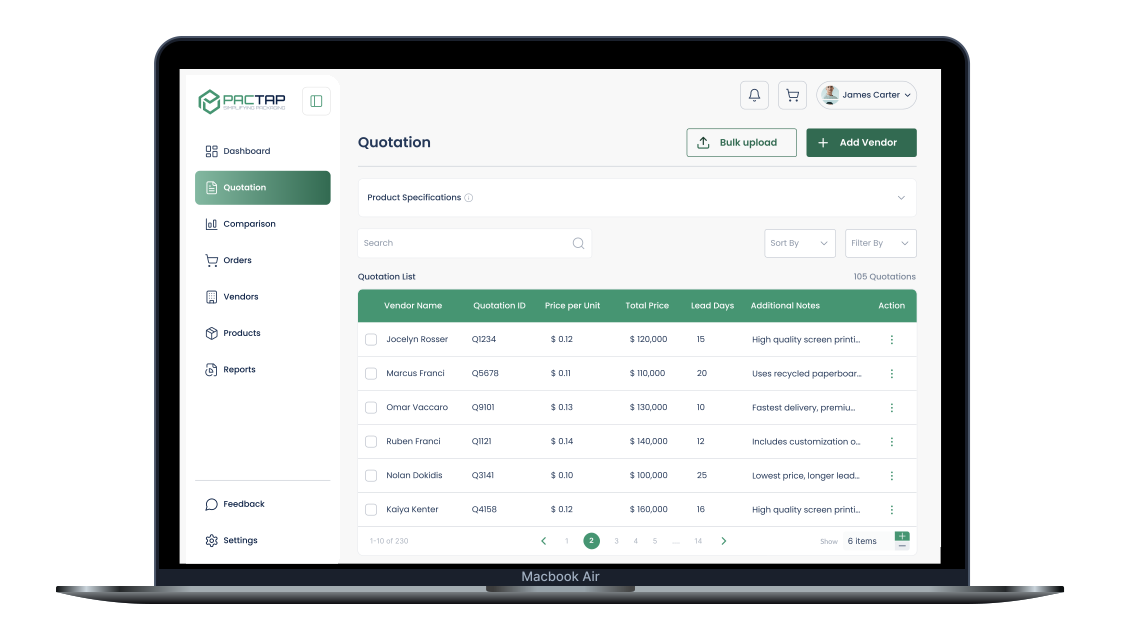
Quotations → Quotation List → Comparison → Order Finalization
Each of these screens was carefully designed to serve a distinct purpose — all while connecting seamlessly in the larger workflow.
What Users Really Wanted
Screen-by-Screen: Solving One Step at a Time
A closer look at how each screen is designed to simplify the procurement process.
Final Outcomes & Impact
By the end of the project, the procurement system:
Reduced the average decision-making time by 60%
Eliminated manual errors by standardizing comparison logic
Empowered Procurement Managers with visual insights and fast actions
Created a calm, focused interface aligned with user preferences
Reflection
This project reminded me that design isn’t always about reinventing workflows — sometimes it’s about removing friction from the tools people already trust. By focusing on what matters most to the user (clarity, structure, control), we created not just a system — but a sense of relief.


